
In an age of AI-polished communication, what makes an organisation believable? Janitha Sukumaran, Rantau+, has advised leaders for more than three decades. She argues that trust comes from closing the gap between what a company says and what employees, customers and partners actually experience. Her talk at our Paris apéro ends with a four-step test any leadership team can use.
Article based on Janitha Sukumaran’s talk at the Lunch at the Circle event in Paris on 15 October 2026
A CEO wants to plant 300 trees and secure media coverage. Janitha Sukumaran’s first response?
“Are you crazy?”
Then come the questions. Why 300? Where will the trees come from? Who will maintain them? How will success be measured?
If the answer is “it’s our 300th anniversary,” her assessment is clear: “That is an anniversary activation. It is not sustainable intervention.”
The exchange captures a central challenge for leaders: a compelling story needs a business reality behind it.
Janitha, founder of Kuala Lumpur communications consultancy Rantau+, joined our Lunch at the Circle apéro in Paris on 15 October 2026. Drawing on more than three decades advising leaders, she explored how organisations earn trust when technology makes professional communication available to everyone.
When everything looks perfect, what stands out?
Faces, voices and fluent prose can all be generated now. Credibility still has to be earned.
“When everyone is perfect and everything is polished, it becomes normal. So then the question is: do you have evidence to actually back up what you’re claiming?”
Janitha calls the capability leaders need narrative intelligence. Under pressure, a leader without it reacts to the loudest comment, issues more statements and tries to control the story.
A leader with it pauses: “Who is steering the boat?” Which stakeholders are shaping the discussion? What matters to them? What evidence supports their claims, and ours?
For leadership teams, this means understanding the situation before deciding how to respond.
Give stakeholders a part in the change
A river regeneration project, begun in 2019, illustrated the limits of communication alone. The river was being cleaned, but public perceptions were not changing.
Her team brought communities, NGOs, academics, businesses and media into the work. Participation helped build shared responsibility for a river damaged by collective activity.
“Communications is not just putting out more stories; it is making sure that people are actually engaged in what you’re trying to change.”
The same discipline applies to those 300 trees. Start with what the environment or community needs. Establish a baseline and define how progress will be measured. Communication then has something credible to report.
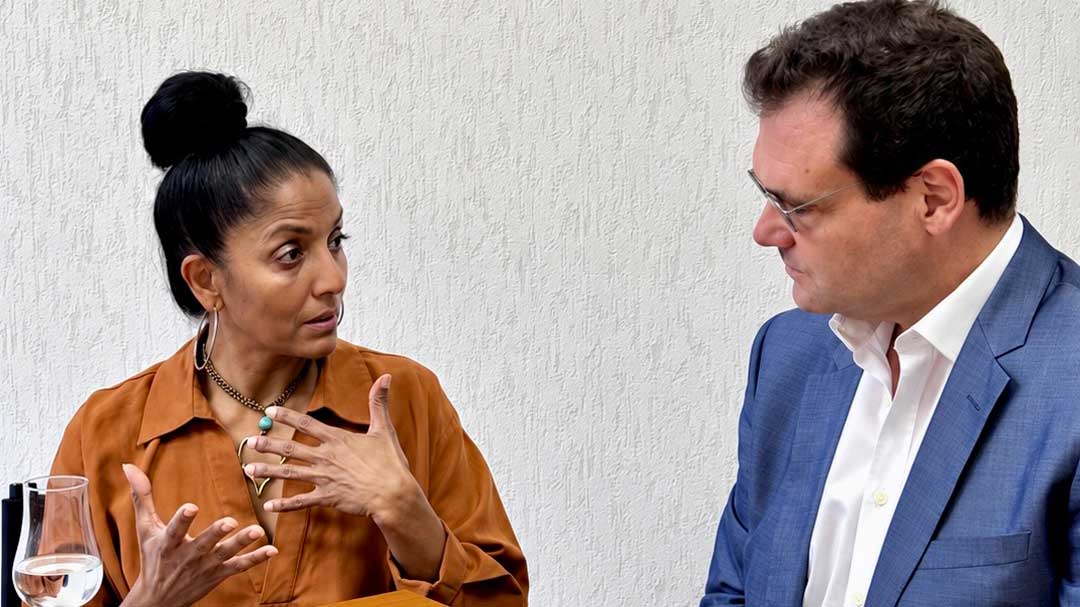
Janitha Sukumaran, Rantau+, and Fabrice Teboul, Lunch at the Circle
You can win in court and still lose
A favourable legal outcome does not resolve every reputational concern.
Janitha offered a hypothetical example: a contact lens company wins a case involving a child who lost their sight. Stakeholders may still ask whether the outcome was fair and what has changed to prevent further harm.
“Winning a case in court does not automatically mean that you have won a reputation.”
Leaders need to address those questions alongside their legal position.
A practical test for leadership teams
- Define the claim. What do we want people to believe about our organisation?
- Examine the evidence. Does our data support it?
- Test the experience. Would employees, customers and partners recognise that claim?
- Address the gap. Explain it honestly or fix it. If neither is possible, Janitha’s advice is direct: “just stop with your content.”

Janitha Sukumaran, Rantau+, and Fabrice Teboul, Lunch at the Circle
Put the time AI saves to better use
The wider apéro discussion turned to how AI could improve advisory work. Janitha described Orca, an internal platform her team spent around 16 months developing to analyse media coverage, corporate statements and ESG commitments, and identify gaps between corporate promises and external reporting.
It also raised a management question: if junior professionals do less research and drafting, how will they develop the judgement to assess an AI-generated answer?
Productivity gains need to support client understanding, mentoring and better decisions. Organisations whose word continues to carry weight will use that capacity to close the gap between what they say and what people experience.
Thank you to Janitha and everyone who contributed to the conversation.
If your organisation’s strongest claim were tested tomorrow against your employees’ everyday experience, would it hold?